Cannabis concentrates all start in the same place: the trichome. These resin glands hold cannabinoids like THC and CBD, along with terpenes that contribute to the flavour, aroma, and overall experience.
What sets concentrates apart is how those trichomes are processed. Everything starts the same, but every step after harvest defines the final product. Starting material, extraction method, and post-processing all influence what ends up in your dabs or inside a cart. Understanding those differences is how you can guide consumers toward products that actually match what they’re looking for.
Solventless vs Solvent-Based
Most concentrates fall into one of two categories:
Solventless concentrates use mechanical processes to separate trichomes.
Solvent-based concentrates use hydrocarbons like butane or propane to extract resin from the plant. Neither is inherently better. They just produce different results!
Solventless: Rosin
Rosin is made by applying heat and pressure to flower, kief, or hash. This forces resin out of the material without introducing solvents. The outcome depends heavily on the input:
Flower rosin tends to be more accessible, but can carry more plant material.
When people say flower rosin “can carry more plant material,” they mean that because it’s made by pressing cured cannabis flower with heat and pressure, more than just cannabinoids and terpenes can make their way into the final extract. Tiny amounts of natural waxes, lipids, chlorophyll, and microscopic bits of plant matter may also be present, which can influence the flavour, clarity, texture, and overall smoothness of the rosin. Flower rosin is often considered “more accessible” because it can be made directly from flower, without the extra processing steps required to make hash first.
Hash rosin, especially from fresh frozen input, is typically more refined.
When people say “hash rosin is more refined,” they mean it starts with a more selective material. Instead of pressing whole flower, producers first isolate the trichome heads into hash and then press that hash into rosin. Because much of the plant matter has already been removed before pressing, the final extract typically contains fewer waxes, lipids, and other plant compounds. When the hash is made from fresh frozen cannabis, it can also preserve more of the plant’s original terpene profile, which often results in a cleaner flavour, brighter aroma, and a more polished overall concentrate.
Temperature also plays a major role in solventless product-making because it directly affects both yield and quality:
Higher heat usually helps extract more oil from the starting material, which can make the process more efficient. The tradeoff is that increased heat can also drive off some of the more volatile terpenes and slightly darken the extract, which may soften some of the more delicate flavour and aroma.
Lower temperatures are often preferred when the goal is flavour preservation. Because less heat is used, more of the terpene profile can remain intact, often resulting in a brighter aroma and a cleaner expression of the cultivar. The tradeoff is that lower-temperature presses typically produce a smaller yield and may require more time and precision.
The way rosin is handled after pressing also has an impact on its final texture.
Freshly pressed rosin may appear sap-like, glassy, or runny, but agitation, whipping, curing, or simply allowing it to rest can change its consistency. Depending on the starting material, terpene content, and post-press handling, the same rosin can settle into a texture that ranges from sticky and viscous to creamy, buttery, or batter-like.
Solvent-Based: Resin Categories
Hydrocarbon extraction pulls cannabinoids and terpenes from the plant using solvents in a controlled system.
When people say “hydrocarbon extraction uses solvents”, they mean compounds like butane, propane, or a blend of both are passed through cannabis plant material in a closed, controlled system. These solvents dissolve and pull out cannabinoids, terpenes, and other desirable compounds from the trichomes.
After that initial extraction, the solvent doesn’t stay in the final concentrate. The extract is placed under heat and vacuum, which helps remove the remaining solvent while preserving as much of the desirable compounds as possible.
From there, the way the extract is purged, handled, and finished helps determine whether it becomes a texture like shatter, wax, badder, sauce, or diamonds.
Shatter
Shatter is typically translucent and brittle, with a glass-like appearance. Minimal agitation during purge creates a glass-like structure.
When people say it’s “shatter,” they’re referring to how the extract was handled during the purging process. Minimal agitation and a stable, controlled purge environment allow the molecules to settle into a uniform structure. This lack of disturbance is what helps create that smooth, rigid consistency that “breaks” or “shatters” when handled.
Wax / Budder
Wax and budder form when the extract is intentionally or naturally agitated during or after the purge process. This creates a soft, opaque texture that is easier to handle.
When people say it’s been “whipped,” they mean air and movement were introduced, which encourages “nucleation” or the formation of tiny crystals within the oil matrix. This changes the structure from a uniform sheet into something softer and more opaque. The result is a malleable, easy-to-handle concentrate with a creamy or crumbly texture that’s often preferred for its convenience and stability at room temperature.
Live Resin
Live resin is made from fresh frozen cannabis instead of dried and cured flower. This process preserves monoterpenes, resulting in brighter, sharper, and often more volatile flavour profiles that reflect the living plant.
When people say “fresh frozen,” they mean the plant was frozen immediately after harvest to preserve its chemical profile in a more complete state. This helps retain a higher proportion of monoterpenes, which are more volatile and tend to be lost during drying and curing. The result is a concentrate with a brighter, more aromatic, and often more expressive flavour profile that is closer to the sensory experience of the living plant at harvest.
Cold Cured Resin
Cold cured resin is defined less by extraction and more by what happens after. Most resins on the market are cured at or above room temperature to accelerate curing. Cold curing slows that timeline, which changes how the final product behaves influencing three things that matter: flavour, texture, and consistency.
When people say “curing”, they’re talking about a controlled resting process that happens after extraction to stabilize and develop the final properties of the resin. It’s similar in concept to curing cannabis flower, but here it refers to how the extract evolves after it has been purged of solvents. During this time, the chemical and physical structure of the extract continues to change as volatile compounds settle, moisture and residual gases equilibrate, and the texture begins to form.
Cold curing simply means this process is done at lower temperatures. This means the resin is allowed to develop more slowly and gently, which influences the final consistency, often preserving a more stable terpene profile and creating a different texture compared to faster, warm-temperature curing methods.
The starting material matters! It can begin with either fresh frozen or dried and cured flower, depending on the producer’s desired product experience for the consumer.
Fresh frozen flower generally preserves lighter, more volatile monoterpenes. When
dried and cured flower is used as the starting material, the terpene profile has already developed. The result tends to reflect what consumers recognize from smoking that strain, rather than presenting a brighter or unfamiliar version of it. Some producers, including FIGR, intentionally work with cured flower to better align the final flavour with the traditional pre-roll flavour experience.
After extraction and solvent removal, the resin is placed in sealed containers and held at low, stable temperatures over time. No aggressive whipping. No elevated heat. During this stage the THCA slowly crystallizes while terpenes remain integrated throughout the extract, and the texture becomes creamy and stable.
This is not a fast process, it is a controlled one that allows the final product to hold a uniform, creamy consistency that resists separation and is easier to handle compared to more volatile, sauce-heavy products. Lower-temperature curing also reduces terpene loss and limits the harshness that can come from faster, higher-heat finishing methods.
Learn more about Cold-Cured Resin.
Why This Matters in a Retail Conversation
A consumer says they liked a strain in flower. They try it in a cart or concentrate, and it tastes completely different. That disconnect often comes down to processing choices, not the cultivar itself. Cold cured resin offers one way to bridge that gap, especially when produced from cured flower. It provides a profile that is more consistent with what the consumer already knows.
Whereas other formats, like live resin, offer a different experience. Brighter, more expressive, sometimes less familiar. Being able to explain that difference clearly is more useful than positioning one as better.
Resin, rosin, and other concentrates are not interchangeable, even when they come from the same strain.
Rosin reflects pressure and heat without solvents
Live resin captures the plant at harvest
Cold cured resin reflects how time and temperature shape the extract after the drying process
Across all concentrates there is one universal truth: quality product comes down to input material, process control, and handling.
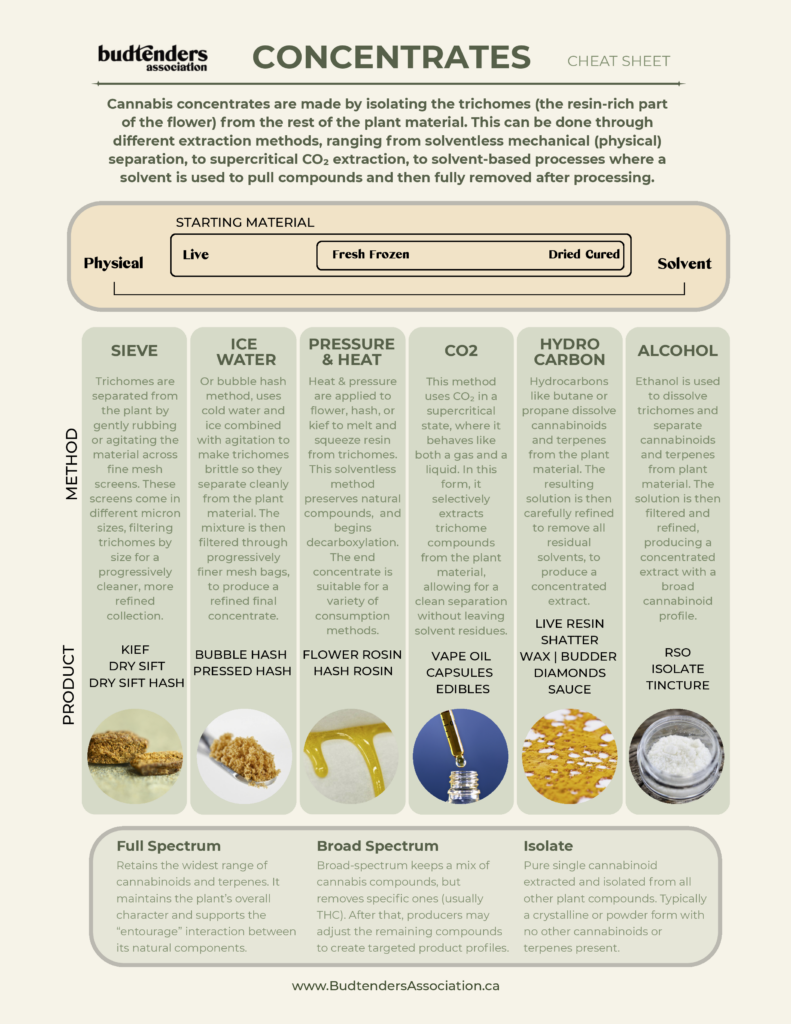
Its a lot to remember, so heres a handy cheat sheet to share with your team!
You can download the printable version here.
Complete the quiz below and test your knowledge for +150 points.